

Requirements and process analysis
Review users, responsibilities, inputs and exceptions to define the problem the application should solve.
Custom software · A workflow for your team
Work across spreadsheets, email and separate tools starts with understanding users, data and decision points. Plan modules around how your team actually works.
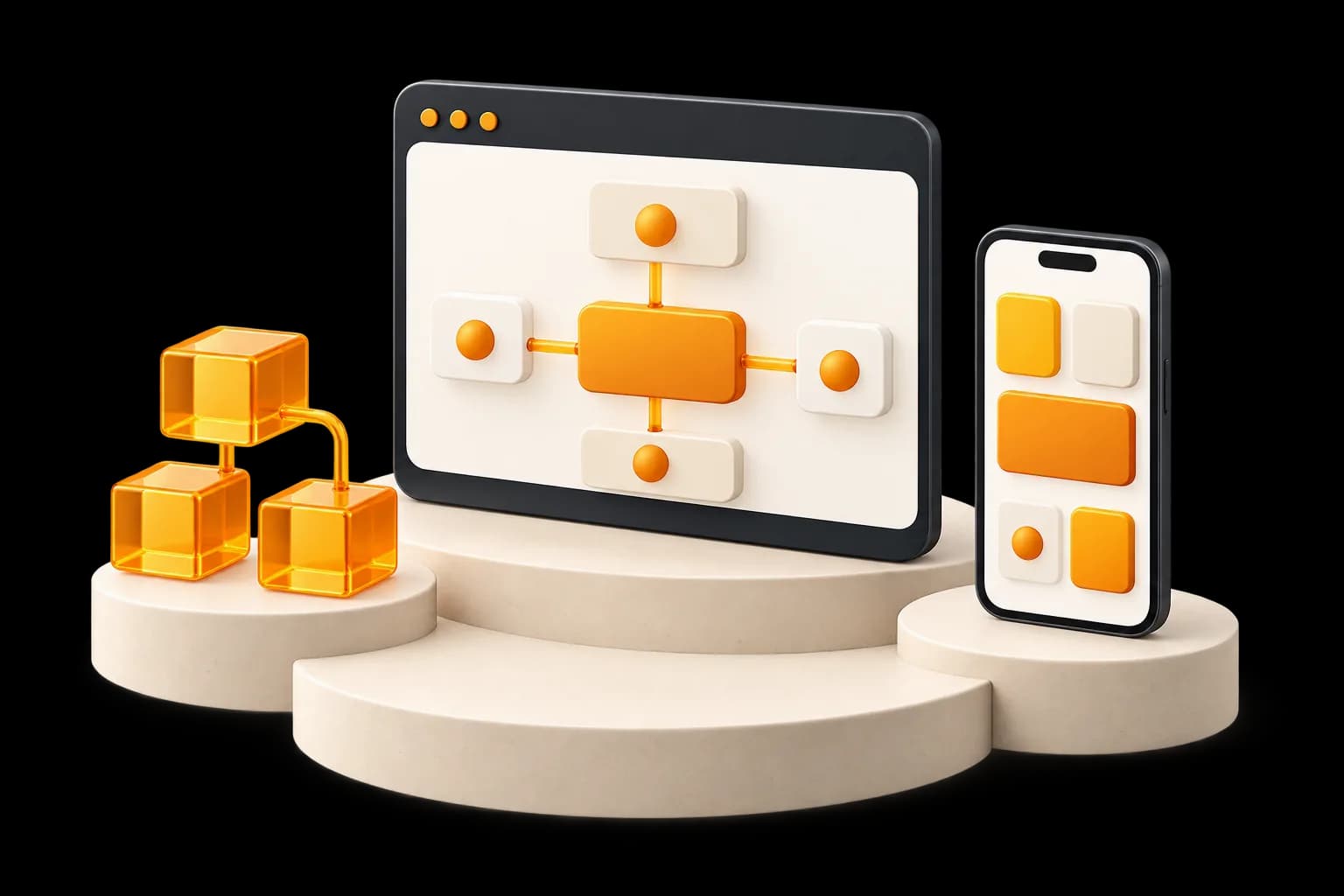
Needs and delivery priorities form the written project scope.
Review users, responsibilities, inputs and exceptions to define the problem the application should solve.
Design screens, data relationships and work steps together, with clear operations for each role.
Scope API connections around approved systems, access permissions and data exchange scenarios.
This illustrative scenario is not a customer project; it explains roles and data relationships.
An employee enters the required information and starts a work step.
The defined role reviews information and chooses the next state using agreed rules.
The team sees the current state and next responsibility in the same workflow.
An illustrative workflow, not a customer project.
Define module scope and acceptance conditions before development.
Document existing work, exceptions and data needs together.
Planned outputDraft roles and business rules
Choose screens and dependencies needed for the first delivery.
Planned outputModule and delivery plan
Implement and test agreed workflows and API scenarios.
Planned outputApplication version for review
Review approved scenarios and share handover information.
Planned outputAcceptance records and usage notes
Checks are confirmed in the product or project agreement.
New modules, third-party usage fees and ongoing maintenance are assessed separately.
It can help when existing tools do not fit your business rules or data flow. We review the problem and available options before defining the development scope.
Modules and dependencies are prioritised. First delivery and later work are separated in the written plan; new needs require an updated scope.
Approved API connections can be assessed. Permissions, documentation, data limits and licences are checked before promising a connection.
Source, usage rights, access and support conditions are explained in the product or project agreement. Ongoing maintenance and new modules are not automatically included.
Discovery defines what each role can view or change and how errors are handled. Agreed checks become acceptance scenarios, with needs reviewed for the specific project.
Review module, delivery and support conditions in the product description. Discuss additional requirements around your workflow before choosing the scope.
Custom Software
Requirements, risks, solution approach and budget range.
Estimated delivery: 5–7 business days
Excluded: Production development
Excluded: External service fees
Excluded: Fixed final project price
Excluding VAT